Evaporative Air Cooler: How It Works, Who It’s For
Before buying Epicooler, understand its family: benefits, limits and who evaporative cooling is for.

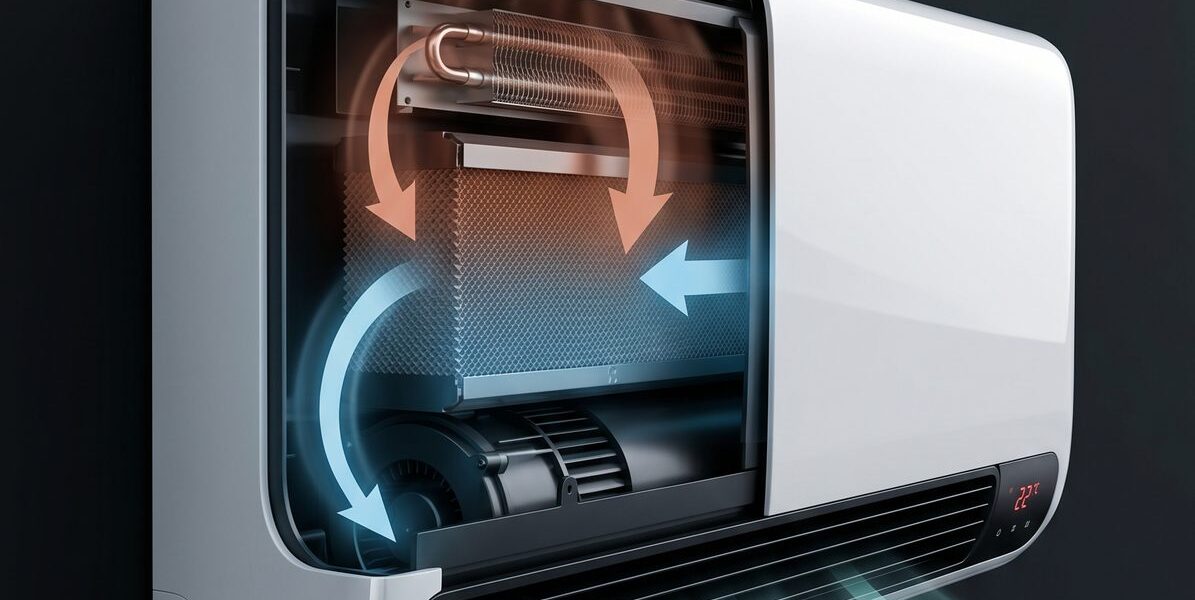
An evaporative air cooler cools the air by evaporating water — a natural, economical process, with no gas and no hose. It cools a zone (not a whole home) and works all the better when the air is hot and dry. Epicooler is a refined version of it: dual heat/cool, wall-mount format, touchscreen and remote.
Before buying a device like Epicooler, it’s worth understanding the family it belongs to: evaporative air coolers. That’s what will save you from wrong expectations — and tell you who it really works for.
How evaporative cooling works
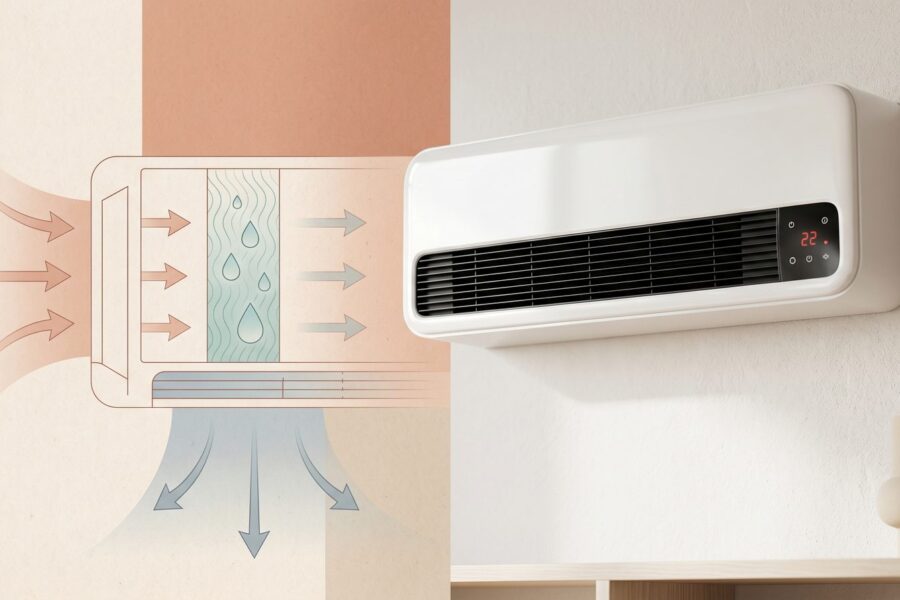
The principle is as old as fountains and terracotta water jars: when water evaporates, it absorbs heat, and its surroundings cool. An evaporative cooler draws in warm air, passes it over a damp pad, and blows out cooled (and slightly humidified) air. No compressor, no refrigerant, no outdoor rejection. It’s exactly Epicooler’s mechanism, detailed in how Epicooler works.
Evaporative or air conditioning: don’t confuse them
| Criterion | Evaporative cooler | Air conditioning |
|---|---|---|
| Principle | Water evaporation | Compressor + refrigerant |
| Effect on humidity | Humidifies a little | Dries |
| Installation | None | Hose or fixed mount |
| Power use | Low | High |
| Best in… | Hot, dry air | Any climate |
The benefits
- Economical: no compressor, so little electricity (see Epicooler’s power consumption).
- Simple: no hose, no installation, no heavy maintenance.
- Healthy in dry air: it re-humidifies the air, welcome when the atmosphere is parched by heat or heating.
- Mobile: you move it where you need it.
The limits (worth knowing before you buy)
- Humid air: above ~70% humidity, evaporation slows and the effect fades. It’s the technology’s number-one constraint.
- Area: it cools a zone, not a large volume (see what room size Epicooler cools).
- Water: a tank to refill regularly and a pad to maintain.
Is it suited to a temperate climate?
Largely, yes. Heatwaves often come with hot and relatively dry air, especially inland and in the south — exactly the favourable ground for evaporative cooling. By the coast, in muggy, humid weather, the effect will be more discreet: place the unit as close to you as possible and keep a slight opening to renew the air. These good habits are gathered in our Epicooler use guide.
Maintaining it for lasting effectiveness
An evaporative cooler lives by its pad and its water. Empty the tank after use, clean the panel and descale it now and then (water + white vinegar mix). A clean pad means effective evaporation — and so cool at full power.
Who it’s for
Evaporative coolers are ideal for renters, small spaces, home working and anyone who can’t (or won’t) install air conditioning. Among them, Epicooler stands out with its dual function and its execution — that’s the subject of our full Epicooler review and our comparison of Epicooler alternatives.
The right cooler, used well
Economical, no installation, hot and cold all year: Epicooler is one of the most refined evaporative coolers around. Check the current offer.
Is an evaporative air cooler effective?
Yes, within its remit: it genuinely lowers the air temperature of a zone, especially in hot, dry air, for very low power use. It doesn’t match an air conditioner over large volumes or in humid air.
What's the difference from air conditioning?
An AC uses a compressor and dries the air; the cooler evaporates water, humidifies slightly and uses far less power, but cools more modestly.
Does evaporative cooling work in a temperate climate?
Yes, especially during dry-air heatwaves inland and in the south. In humid coastal air the effect is more discreet; place the unit as close to you as possible.

The Epicooler team tests, measures and compares portable climate-comfort gear to help you choose without getting it wrong.
Honest Epicooler tests, before you buy.
Get our hands-on tests and buying guides on Epicooler — no hype, no spam.