Setting Up and Using Epicooler: The Complete Guide
Tank, mounting, seasonal settings: everything to be up and running in five minutes and get the best from the unit.

Setting up Epicooler takes under five minutes: fill the water tank, fix the unit to the wall (bracket supplied) or stand it flat, plug in, switch on. No special tools, no tradesperson. This guide covers each step, the seasonal settings, maintenance and the little habits that make the difference.
You don’t need to be handy. Epicooler is designed to be up and running in minutes, even with no technical skill. Here’s the procedure, then our settings and maintenance tips so it keeps its full effectiveness season after season.
Setting up Epicooler step by step
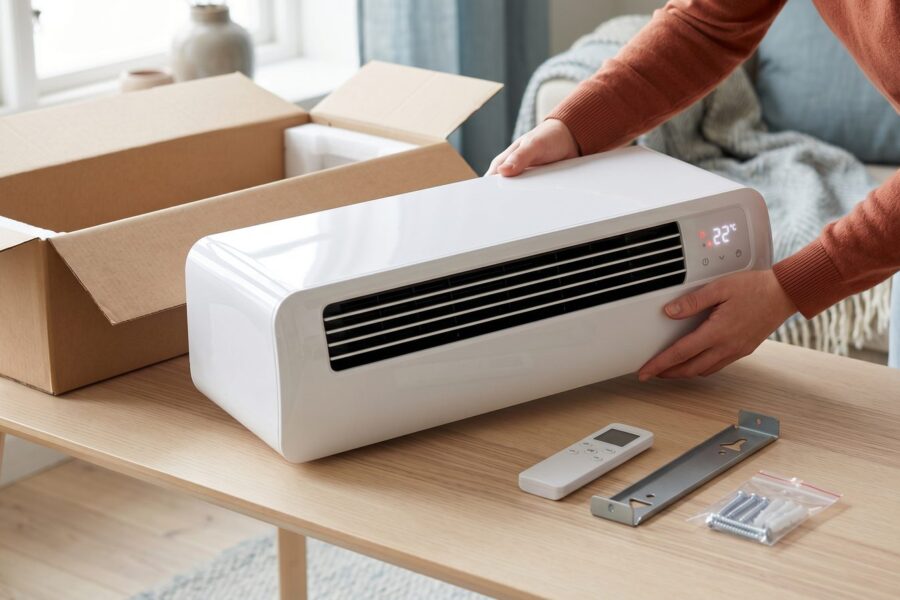
- Unbox and check: the unit, the remote, the wall bracket and screws, the guide.
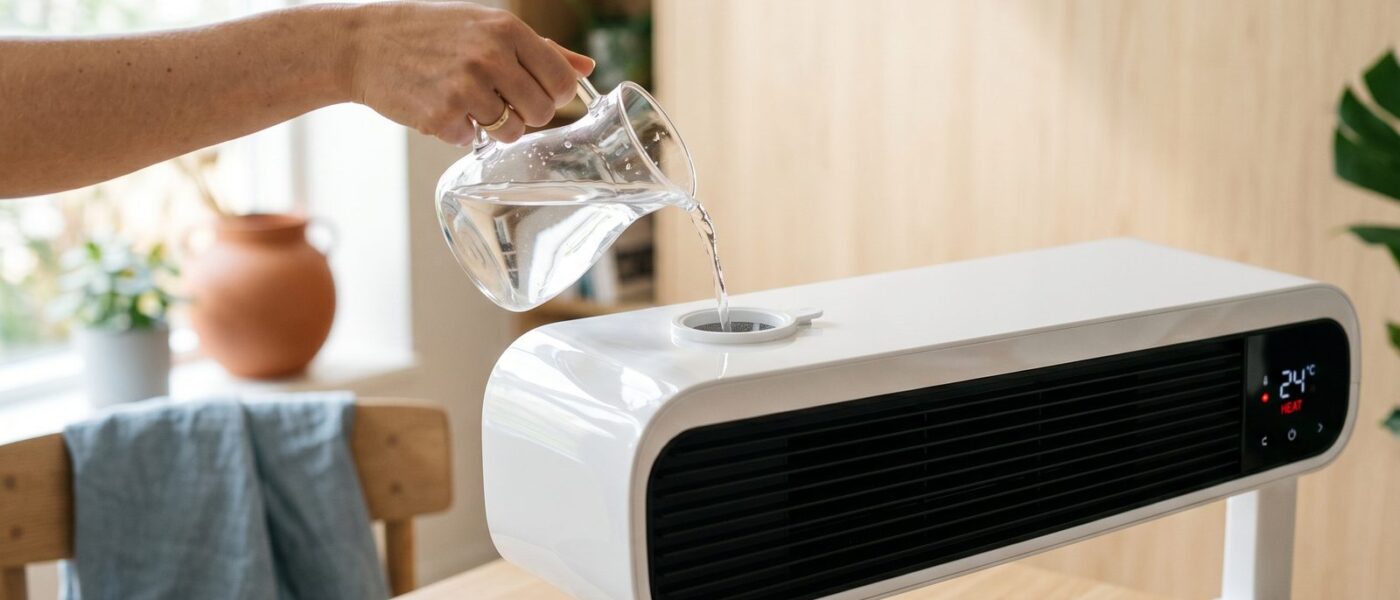
- Fill the tank: pour tap water into the tank (≈ 600 ml) used for cooling. Not needed in heating mode.
- Choose the spot: on the wall with the bracket supplied, or flat on a stable surface, near a socket. Don’t box it into a corner with no airflow.
- Plug in: into a standard socket, no under-rated extension lead.
- Switch on: via the touchscreen or the remote, and pick your mode.
That’s all. Half the time is spent reading a one-page guide you don’t really need. It’s one of the strong points highlighted in our Epicooler test.
Where to place Epicooler for maximum effect
Placement changes everything on an evaporative cooler:
- Close to you: the coolest air is at the outlet. In a large room, move the unit nearer the living zone.
- With a little fresh air: unlike an AC, an evaporative cooler likes a slight air exchange. Keeping an opening ajar avoids humidity-saturated air and feeds the evaporation.
- Not in a closed corner: leave space in front of the outlet grille.
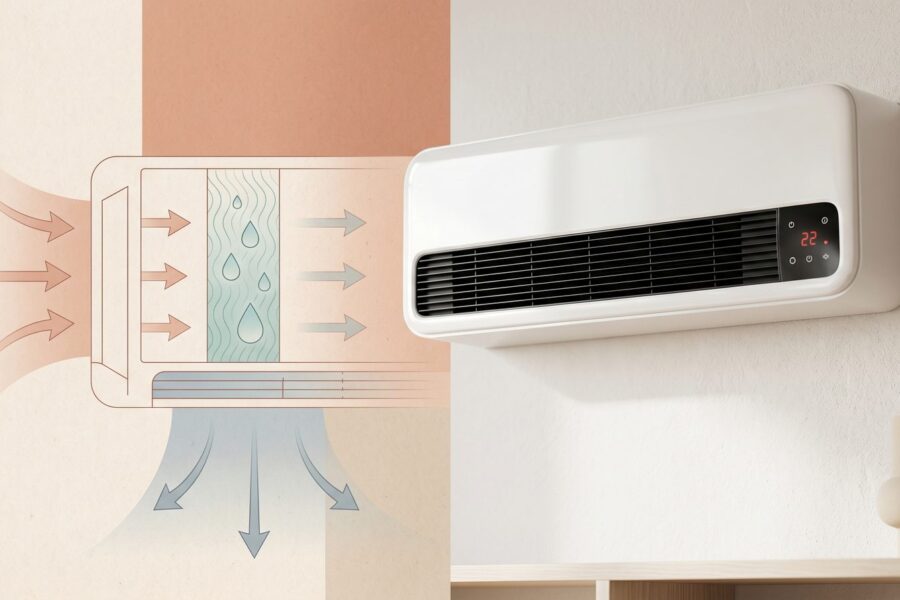
We explain why in how Epicooler works and in our guide to the evaporative air cooler.
Setting Epicooler by season
- Summer, cool fast: Turbo for 15 minutes, then Eco to maintain.
- Night: Sleep mode + timer (see Epicooler’s noise level).
- Winter: ceramic heating mode, set the target temperature and let the PTC self-regulation do the rest.
Maintaining Epicooler (and preserving its effectiveness)
Maintenance is minimal, but it drives the output: a clogged pad cools less well and uses just as much.
- Empty the water after prolonged use or if the unit sits unused for several days: standing water encourages odours and deposits.
- Clean the pad regularly and let it dry: it’s what does the evaporation.
- Descale now and then with a 50/50 water and white vinegar mix: leave it for about thirty minutes, rinse, dry. This removes tap-water limescale.
- Dust the grille with a dry cloth.
- Store it clean at season’s end: tank emptied, pad dry, unit unplugged.
No mandatory consumable other than tap water — a point our readers appreciate when they read the Epicooler customer reviews.
Common little issues and fixes
- “The airflow isn’t cool enough”: check the water level and the pad’s condition, and move closer to the unit. In very humid air the effect is naturally more discreet.
- “It stops on its own”: often an empty tank (safety cut-off) or the timer running.
- “A smell on restart”: clean the tank and pad with diluted vinegar.
Ready to grab the Epicooler deal?
30-day trial, money-back guaranteed. If Epicooler doesn’t win you over, it goes back free.
Is Epicooler hard to set up?
No. It sets up in under five minutes: fill the tank, fix or stand the unit, plug in, switch on. No special tool or tradesperson.
Do you have to drill the wall for Epicooler?
You can fix it to the wall with the bracket supplied, but you can also simply stand it flat on a stable surface. Your choice depending on your home — handy in a rental.
How do you maintain Epicooler?
Empty the water after use, clean the pad, descale now and then with a 50/50 water and white vinegar mix, and dust the grille. Nothing more.
Do you have to refill the tank every time?
In cooling, yes: a full tank of about 600 ml gives 8 to 10 hours. In heating, no water is needed.

The Epicooler team tests, measures and compares portable climate-comfort gear to help you choose without getting it wrong.
Honest Epicooler tests, before you buy.
Get our hands-on tests and buying guides on Epicooler — no hype, no spam.