How Does Epicooler Work? The Technology Explained
Evaporation, PTC ceramic heating, no hose: we break down how Epicooler works, step by step.

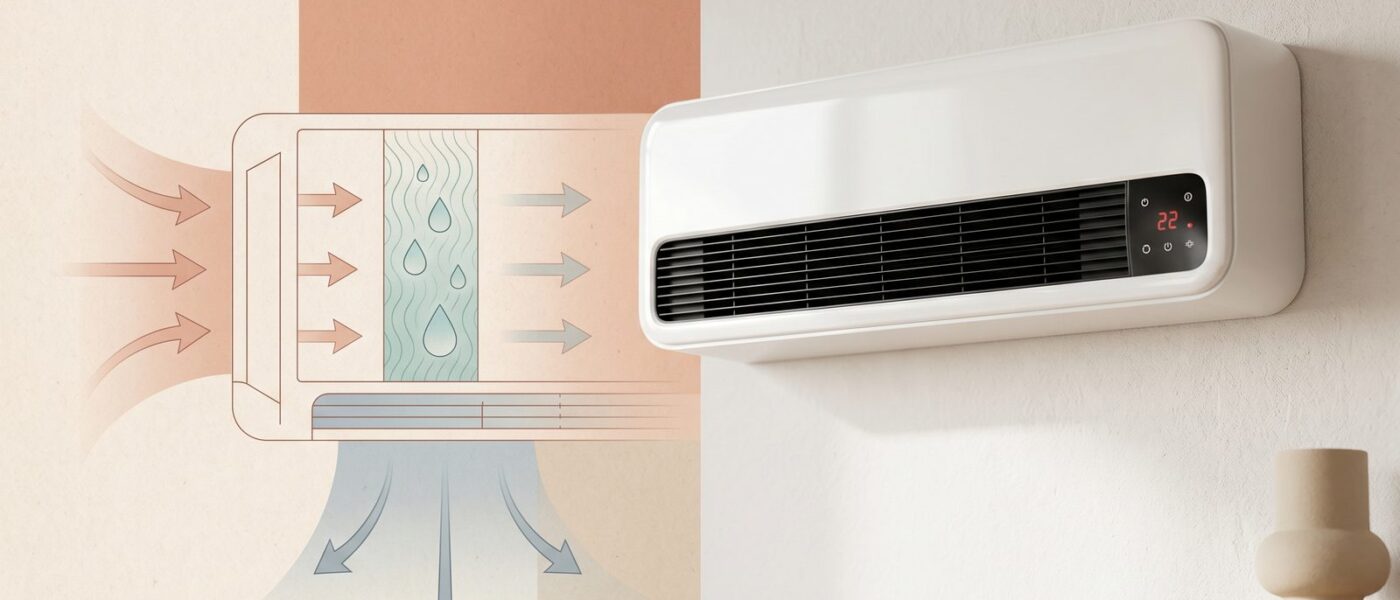
Epicooler cools by evaporation (warm air passes over a damp pad and comes out cooler) and heats with PTC ceramic elements. No compressor, no gas, no hose: everything happens inside the casing, which is why you can place or fix it anywhere.
“How can it make cold with no exhaust hose and no gas?” It’s the most asked technical question — and the answer is simpler than you’d think. Let’s break down how Epicooler works, step by step.
Evaporative cooling, explained
The principle is the one you feel stepping out of water: when water evaporates, it absorbs heat, and its surroundings cool down. Epicooler uses exactly that.
- Intake: a fan draws the room’s warm air in through the top of the unit.
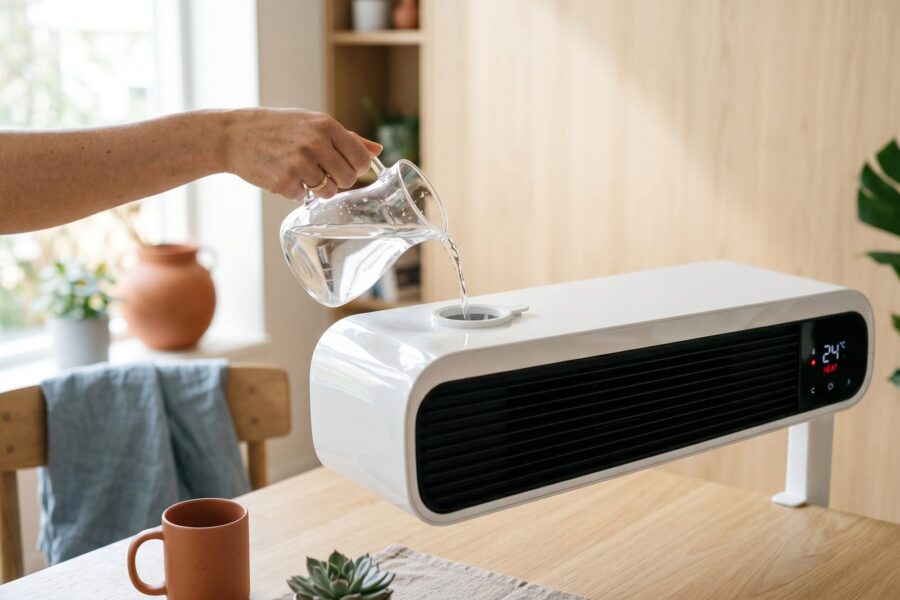
- Damp pad: that air passes through a pad (cooling pad) kept moist by the 600 ml water tank.
- Evaporation: on contact with the pad, some of the water evaporates and captures the air’s heat.
- Blow-out: the air, now cooler (and slightly more humid), is blown into the room through the lower grilles.
That’s why it needs neither an exhaust hose nor a condensate tray to empty: there’s no condensation like on an AC, but evaporation. The flip side: you have to refill the tank, and the effect is more discreet when the room air is already very humid.
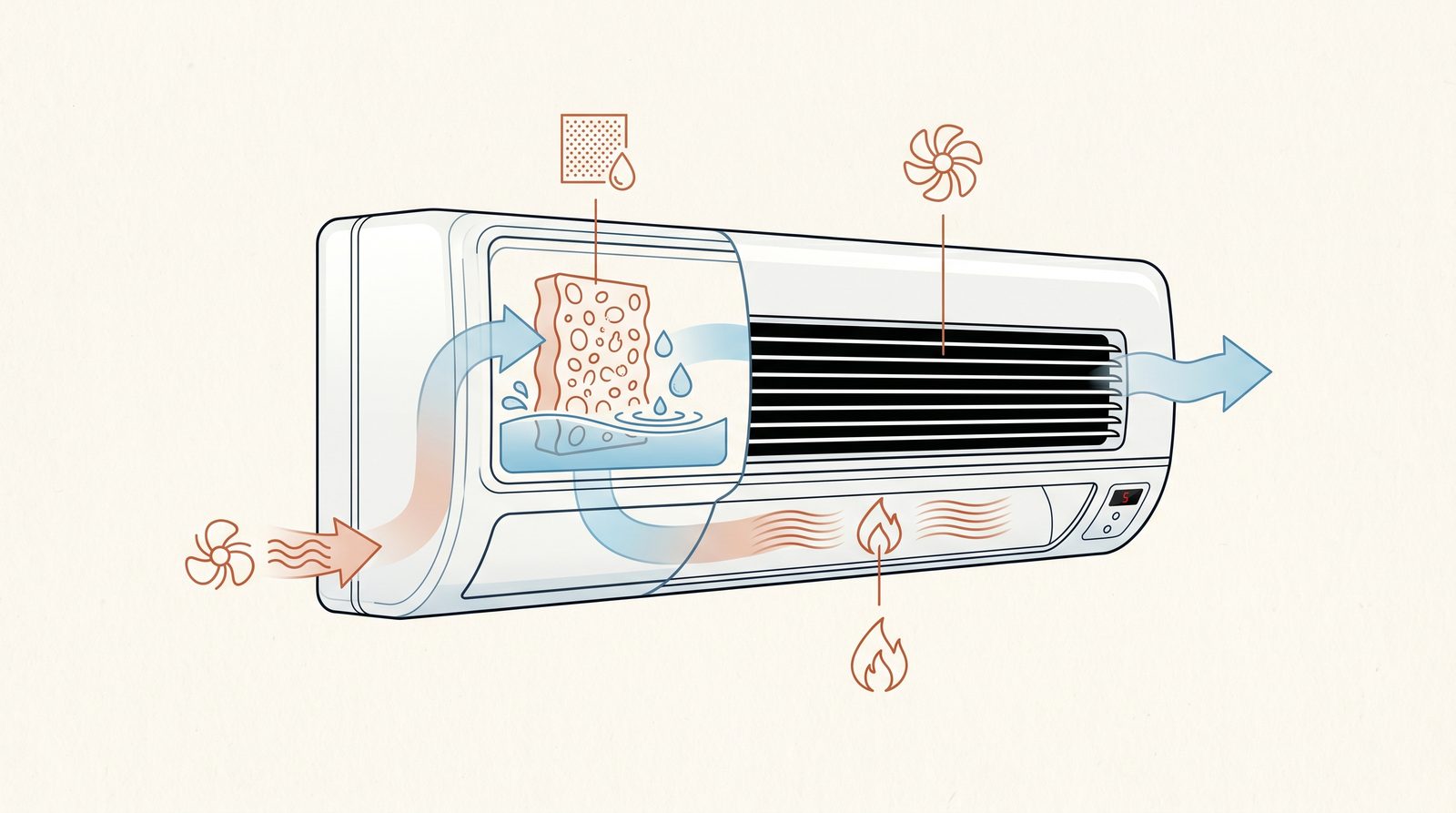
PTC ceramic heating
In winter, Epicooler switches to heating using PTC ceramic resistors. Their trick: they’re self-regulating. They heat up fast, then automatically reduce their power as they approach the target — safer and more economical than a plain resistor running flat out.
Why no hose or installation?
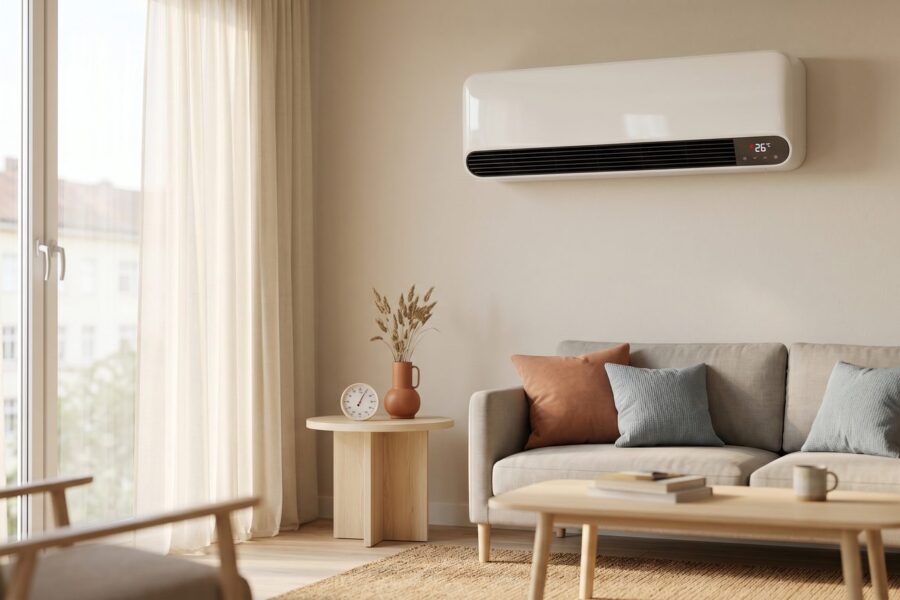
A compressor AC has to reject the extracted heat outside: hence the hose and the window. Epicooler doesn’t work by extracting heat via a refrigerant: the whole process (intake, humidification, blow-out) happens inside the casing. The result: no outdoor connection, so no installation. It’s the accepted trade-off of an evaporative cooler — less powerful than an AC, but far simpler.
The modes and settings
- Cool / Heat: the two main functions, summer and winter.
- Speeds: low, medium, high, plus a Turbo mode to cool fast.
- Eco: economical continuous running.
- Sleep: quiet mode for the night, ideal with the timer.
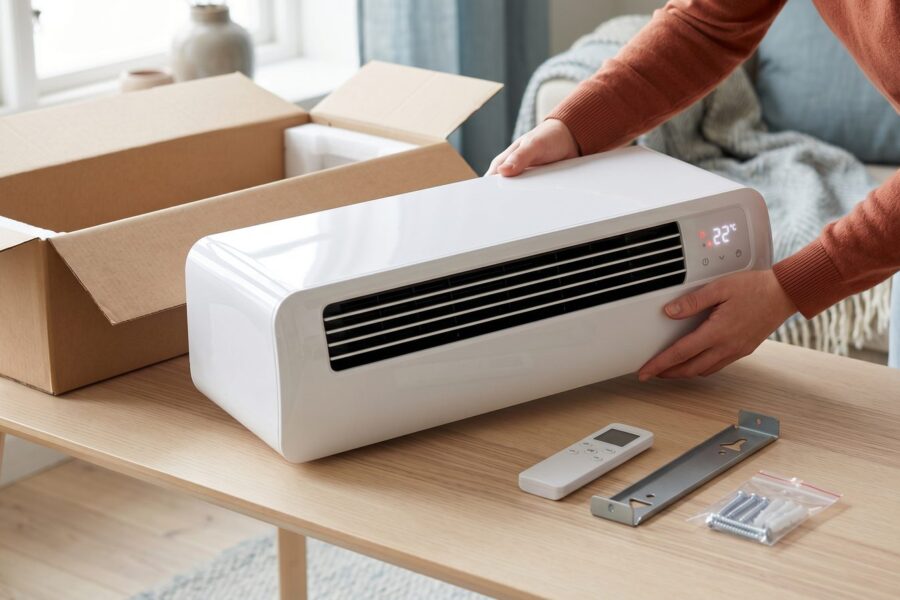
Everything is controlled from the touchscreen or the included remote. To set it up well from day one, follow our Epicooler setup and use guide.
What it means for effectiveness
Understanding the technology means understanding its limits — and using it well. Three direct consequences:
- The effect is greatest in hot, dry air, and close to the unit.
- It effectively cools a moderately sized room — we set out what room size Epicooler really cools.
- It draws very little power, for lack of a compressor — see our consumption analysis.
Ready to grab the Epicooler deal?
30-day trial, money-back guaranteed. If Epicooler doesn’t win you over, it goes back free.
How does Epicooler work with no hose or gas?
It cools by evaporation: warm air passes over a pad kept damp by a water tank, the evaporation captures the heat, and the air comes out cooler. Everything happens inside the casing, hence no hose and no installation.
Does Epicooler use water?
Yes, a tank of about 600 ml feeds the damp pad. A full tank gives 8 to 10 hours of cooling.
How does it heat in winter?
Through self-regulating PTC ceramic elements, which heat up fast then reduce their power once the target is reached.
Why is it less powerful than an air conditioner?
Because it has no compressor: it cools by evaporation, a gentler and more economical process, but more modest than an AC, especially in humid air or a large room.

The Epicooler team tests, measures and compares portable climate-comfort gear to help you choose without getting it wrong.
Honest Epicooler tests, before you buy.
Get our hands-on tests and buying guides on Epicooler — no hype, no spam.