Epicooler Power Consumption: What Does It Really Cost?
Watts, comparison with an AC: the real running cost of Epicooler, and how to lower it.

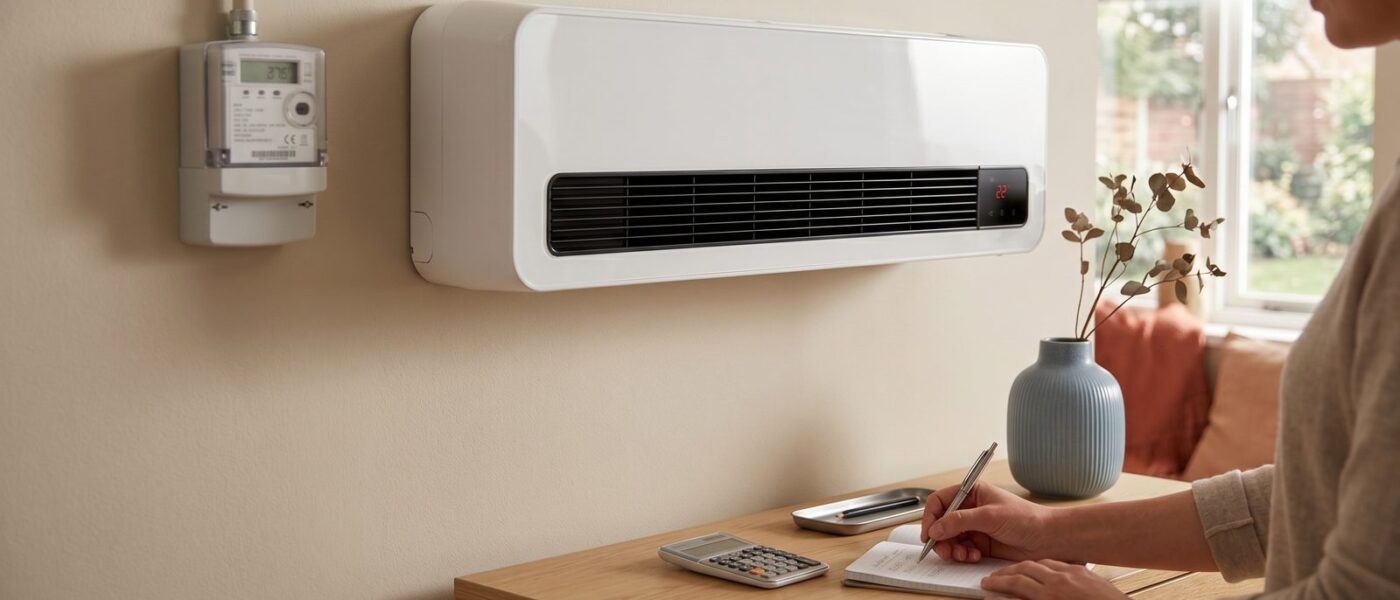
Epicooler draws around 400 to 660 W when running, versus 1,000 to 2,500 W for a regular air conditioner — a fraction of the energy. With no compressor, it’s one of the most frugal comfort devices in its category. Along with portability, it’s its strongest argument.
Expensive electricity has changed things: a comfort device is no longer judged on purchase price alone, but on what it costs to run. Good news — that’s exactly where Epicooler is unbeatable in its category. Let’s break down its consumption, no jargon.
Epicooler’s real power consumption
With no compressor, Epicooler makes do with a fan, a water pump and — in winter — a ceramic resistor. In cooling, its draw is around 400 to 660 W depending on the speed chosen. In heating, it depends on the power demanded, but the PTC self-regulation (the resistor eases off once the temperature is reached) sharply limits the bill. For reference, a regular AC needs 1,000 to 2,500 W: a ratio of 1 to 4, or more.
| Device | Typical power | Consumption level |
|---|---|---|
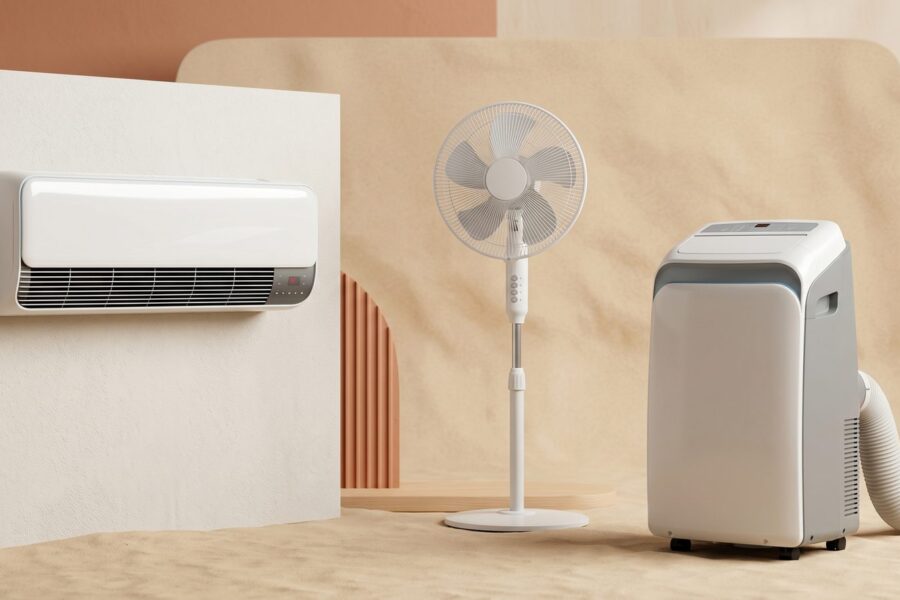
| Epicooler (cooling) | ~400–660 W | Very low |
| Fan | ~30–70 W | Minimal (but doesn’t cool) |
| Portable AC | ~1,000–1,500 W | High |
| Split AC | ~1,000–2,500 W | High |
Why Epicooler uses so little
Three simple reasons:
- No compressor: it’s the hungriest part of an AC. Evaporative cooling does without it entirely.
- One room only: you condition the volume you’re in, not the whole home.
- Eco and Sleep modes: which cut the power further when you don’t need the maximum.
And the heating, does it use a lot?
Any electric heater turns electricity into heat, Epicooler like the rest. Its strength is the self-regulating PTC ceramic: once near the target temperature, the material’s resistance rises and the current drops on its own. So the unit isn’t running “flat out” the whole time. In practice — warming only the occupied room rather than the whole home via central heating — the bill stays very contained. We also touch on this in our full Epicooler review.
How to cut the bill even further
- Use Eco mode as soon as the room is up to temperature.
- Place the unit close to you: the felt effect is stronger, so you turn the power up less.
- Use the timer at night so it switches off on its own (see Epicooler’s noise level for night use).
- Close shutters and curtains during the hot hours: less heat to offset, fewer watts.
- Keep the pad clean: a clogged panel reduces evaporation effectiveness, and so the output (see the Epicooler use guide).
This frugality goes hand in hand with its technology: if the “how” interests you, read how Epicooler works.
Comfort that doesn't wreck the bill
Low power use, dual heat/cool, zero installation. Check the current offer on the official store.
What is Epicooler's power consumption?
Around 400 to 660 W in cooling, far less than a regular AC (1,000 to 2,500 W). Over daily summer use the gap on the bill is significant.
Does Epicooler use more than a fan?
Yes, a little more: a fan runs at around 30 to 70 W but doesn’t cool the air. Epicooler uses more because it evaporates water to genuinely cool.
Does Epicooler's heating use a lot?
The PTC ceramic heating is self-regulating: it reduces its power once the temperature is reached, which limits consumption compared with a plain resistor running continuously.

The Epicooler team tests, measures and compares portable climate-comfort gear to help you choose without getting it wrong.
Honest Epicooler tests, before you buy.
Get our hands-on tests and buying guides on Epicooler — no hype, no spam.