Is Epicooler Quiet? Noise Level and Night Use
35 dB in Sleep, 55 on Turbo: what that really means, and our settings for a peaceful night.

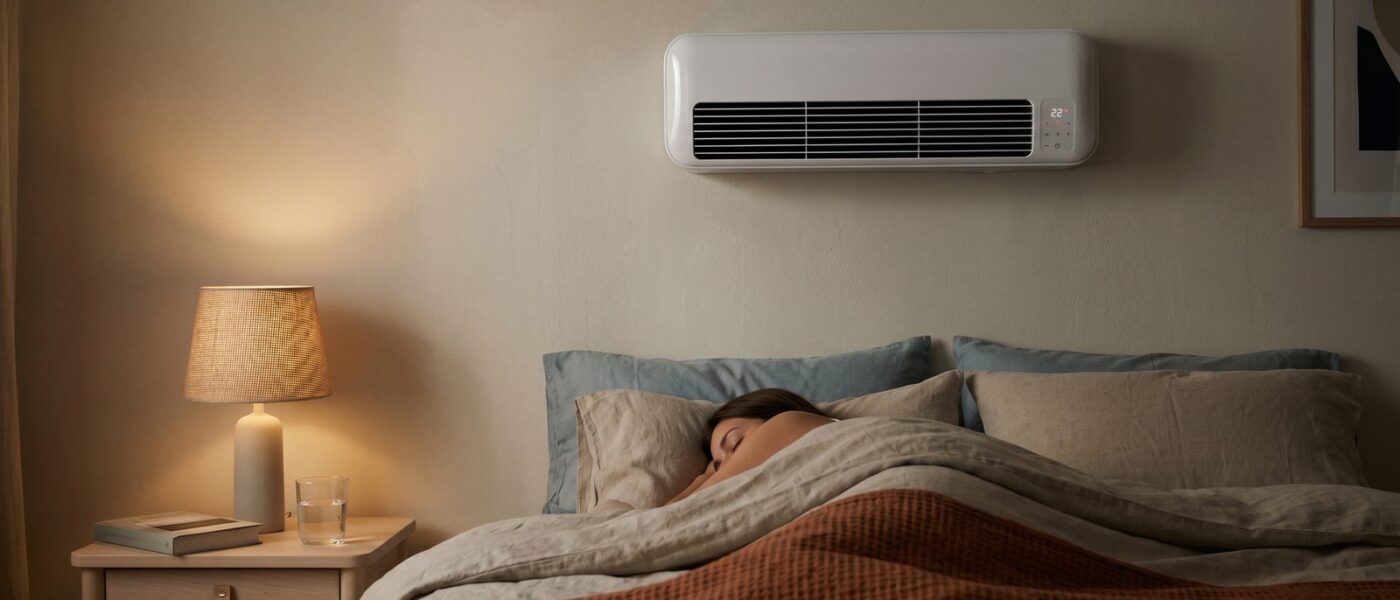
Yes. In low or Sleep mode, Epicooler runs at around 35 to 40 dB — the level of a quiet library, below the 40 dB specialists recommend for uninterrupted sleep. On Turbo it naturally rises (up to ~55 dB), but that mode is for cooling fast, not sleeping. With the timer, it’s a discreet night-time companion.
A bedroom device that makes noise is a device you unplug. The noise question is therefore decisive — especially for light sleepers. Here’s what we observed with Epicooler, without sugar-coating, and how to read the figures.
Understanding decibels: the scale that matters for sleep
The decibel isn’t linear, so here are concrete markers to place Epicooler:
| Level | Feel | Example |
|---|---|---|
| ≤ 20 dB | Ultra-quiet | Bedroom at night, breathing |
| 20–30 dB | Quiet | Rustling leaves |
| 30–40 dB | Discreet | Quiet library |
| 40–50 dB | Present but tolerable | Living room, light rain |
| > 50 dB | Can disturb sleep | Conversation, old AC |
Sleep specialists recommend staying below 40 dB to avoid fragmenting the night. Epicooler on low sits right in that zone — where many portable ACs top out between 50 and 65 dB.
Epicooler’s noise levels, mode by mode
| Mode | Noise level | Recommended use |
|---|---|---|
| Sleep / low | ~35–40 dB | Night, bedroom, reading |
| Medium | ~40–48 dB | Daytime, office, living room |
| Turbo | ~50–55 dB | Cool fast, then turn it down |
Our experience after several nights
We expected the drone of an old window AC. Instead, in Sleep mode, it settled into a soft, steady exhale — closer to light white noise. Many users actually describe it as a help for falling asleep, the airflow masking outside sounds. The only moment it makes itself heard is on Turbo: normal, you’re asking for maximum air then. It’s one of the points our full Epicooler test confirms.
Why it can be this quiet
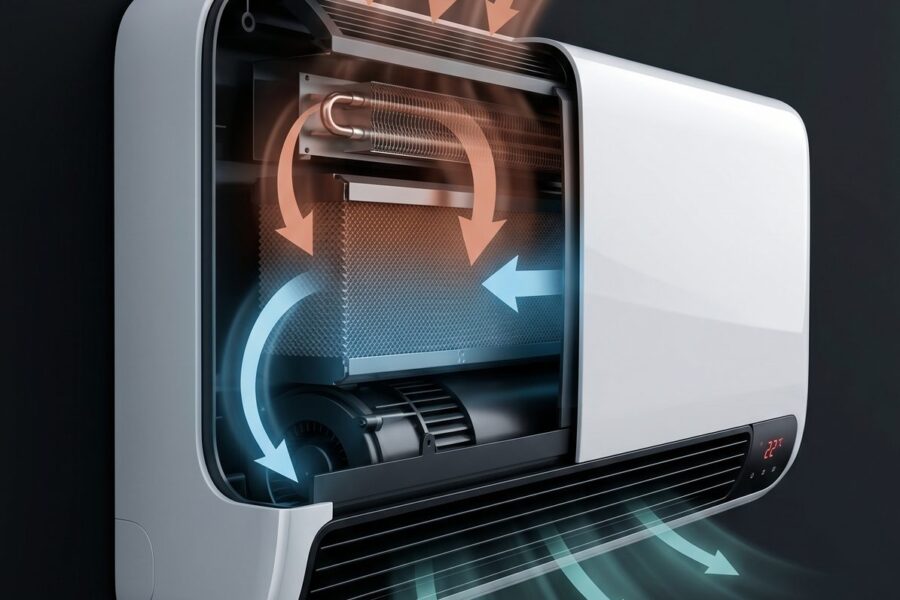
The explanation is mechanical: no compressor cutting in and out noisily, just a fan and a water pump. On low speed the motor turns slowly while still moving enough air to keep evaporation going. It’s the same compressor-free logic that makes Epicooler both quiet and frugal — see how Epicooler works and its power consumption.
Our tips for night-time use
- Run Turbo for 15 minutes before bed to cool the room…
- …then switch to Sleep for the night.
- Set the timer: the unit switches off on its own, so you don’t wake up to turn it off.
- Move it slightly away from the headboard if you’re very sensitive to any airflow.
- Place it on a stable surface: vibrations on a flimsy piece of furniture can add a parasitic noise.
Versus a portable AC
This is where the gap shows: a portable AC combines fan noise and a compressor cutting in by cycles, often above 50 dB. For a bedroom, Epicooler is far more restful — one more argument developed in our comparison Epicooler or a portable AC.
Ready to grab the Epicooler deal?
30-day trial, money-back guaranteed. If Epicooler doesn’t win you over, it goes back free.
Is Epicooler quiet?
Yes, in low or Sleep mode: around 35 to 40 dB, the equivalent of a quiet library. That’s below the 40 dB advised for good sleep.
Can you leave Epicooler running at night?
Absolutely. In Sleep mode with the timer, it’s discreet enough not to disturb sleep and switches off on its own at the chosen time.
Does Epicooler make noise on Turbo?
Yes, up to about 55 dB, like a strong fan. That mode is for cooling quickly: you then switch to Sleep for the night.
Is it quieter than an air conditioner?
Generally yes: with no compressor cutting in by cycles, Epicooler in night mode stays below the levels of a portable AC, often between 50 and 65 dB.

The Epicooler team tests, measures and compares portable climate-comfort gear to help you choose without getting it wrong.
Honest Epicooler tests, before you buy.
Get our hands-on tests and buying guides on Epicooler — no hype, no spam.